
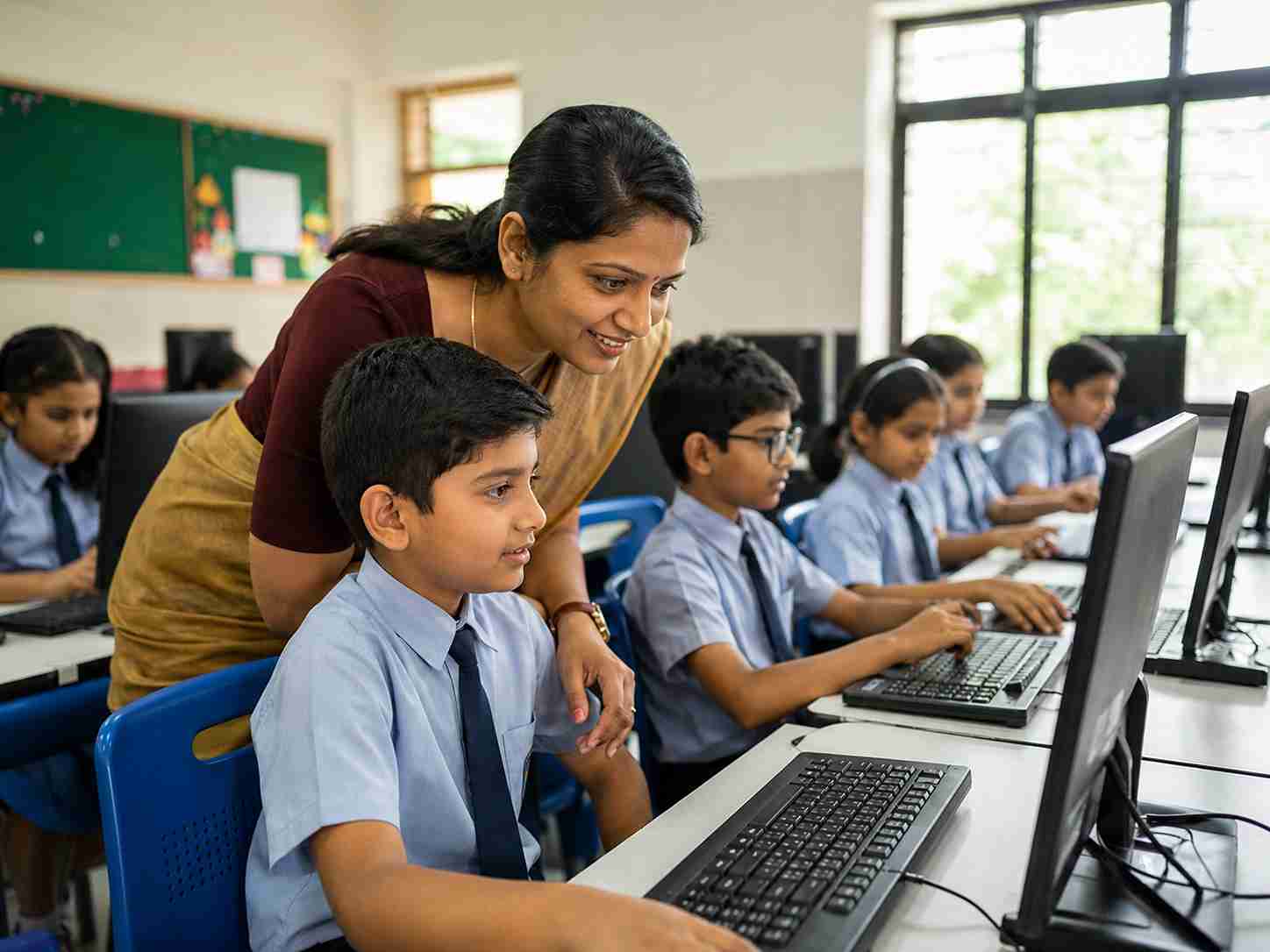
Technology is no longer a “smart classroom” add-on. It is the classroom. In 2026-27, a student who can’t use a computer confidently is at the same disadvantage as one who can’t read fluently.
Parents searching for a school today aren’t just asking “does it have computer class.” They’re asking whether their child will be ready for an AI-driven job market by the time they finish school. This guide covers why computer education matters, what the data says about Indian schools, and how the right foundation — built early — prepares students for both exams and careers.
What Is Computer Education and Why Does It Matter Today?
Computer education means more than typing and using MS Office. It covers digital literacy, safe internet use, basic coding logic, and — increasingly — working alongside AI tools.
Students today research, submit assignments, and even take exams online. A student without computer skills is locked out of most of modern schooling, not just future jobs.
For this reason, Bodhi Bhavans Collegiate School treats computer education as core curriculum, not an elective.
Why Is Computer Education Important for Students?
Modernises Classroom Learning
Computers let teachers plan lessons with real-world examples, videos, and simulations instead of relying only on textbooks. Students can also verify facts and go deeper into a topic using the internet, under supervision.
Improves Academic Performance
Students who use computers regularly tend to stay more focused on assignments at home. They can collaborate on projects with classmates without needing to meet in person. Well-equipped computer labs give students hands-on practice, not just theory.
Builds Future-Ready Job Skills
Almost every entry-level job today expects basic computer fluency — from filling forms to using spreadsheets. Starting early means students join advanced courses in coding, data, or design later without a steep learning curve.
Makes Learning More Efficient
Report cards, homework portals, and teacher communication now happen online. Students can submit assignments from home and track their own progress, which builds independence early.
Makes Research Faster and Smarter
What once meant hours in a library now takes minutes online. Digital libraries and verified educational resources let students go deeper into any topic — as long as they’re taught how to judge a reliable source from an unreliable one.
How Many Indian Schools Actually Have Computers?
Computer access in Indian schools has grown sharply, but it’s still uneven. Here’s the latest picture:
| Metric (UDISE+ 2025–26) | Figure |
| Schools nationwide equipped with computers | 69.9% |
| Schools with internet connectivity | 67.4% |
| Total students enrolled across India | Over 24.72 crore |
Source: India CSR — UDISE+ 2025–26 report
This is exactly why parents are told to check a school’s actual IT infrastructure — labs, ratio of computers to students, and internet access — rather than assume every CBSE school offers the same setup.
Computer Literacy vs AI Literacy: What’s the Difference?
Computer literacy is the foundation. AI literacy is what’s now built on top of it — and employers are already asking for it.
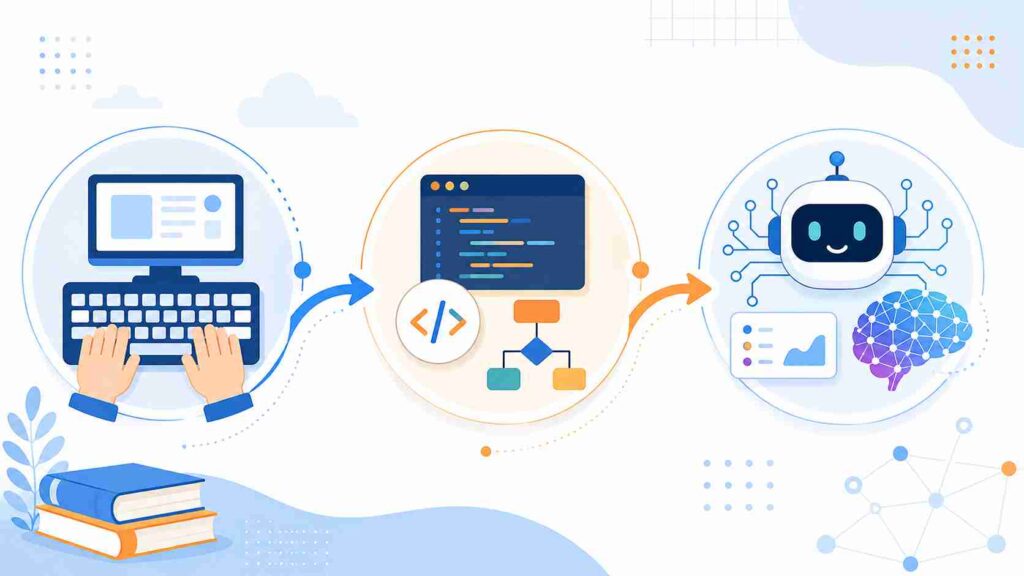
More than 90% of Indian employees are already working with generative AI tools, and AI skills have become the hardest skillset for employers to find, ahead of even traditional engineering roles.
Source: Shoolini University — What Employers Want in 2026
What this means for school students: a child who learns computer basics early — typing, file handling, logical thinking, safe internet habits — is the child who can pick up AI tools confidently in college or their first job. Skipping this foundation makes the AI gap harder to close later.
In short: Computer education isn’t competing with AI education. It’s the runway AI skills take off from.
Which Computer Skills Should Students Learn at Each Stage?
| Stage | Core Focus | Skills to Build |
| Nursery to Class IV | Familiarity | Mouse/keyboard basics, educational apps, screen-time habits |
| Class V to VIII | Foundational literacy | Typing, MS Office basics, intro to logical/coding thinking |
| Class IX to X | Applied skills | Computer Applications subject, internet research skills, cyber safety |
| Sr. Secondary — Science stream | Specialisation | Informatics Practices / Computer Science, programming basics |
Skipping a stage usually shows up later — students who never built basic file-handling or typing habits struggle more when they hit Computer Science in Class 11.
Computers are no longer optional in a student’s education — they’re the baseline. Schools that build this foundation early, stage by stage, are the ones preparing students for an AI-driven future, not just an exam.
Related Reads:
Why Middle School is the Perfect Time to Learn AI, Coding, and Financial Skills
3C Curriculum: A Parent’s Guide to Modern Learning
FAQs: Computer Education for School Students
Q: At what age should a child start learning computers?
Ans. Basic familiarity (mouse, keyboard, simple apps) can start from Nursery. Structured computer subjects usually begin around Class V–VI.
Q: Is computer education compulsory in CBSE schools?
Ans. Yes, CBSE mandates Computer Applications / Informatics Practices at the secondary and senior secondary level, though implementation varies by school.
Q: Does computer education prepare students for AI-related careers?
Ans. Yes — it’s the foundation. Typing, logical thinking, and file handling are prerequisites before a student can meaningfully use coding or AI tools.
Q: How do I check if a school’s computer lab is actually good, not just advertised?
Ans. Ask about the student-to-computer ratio, internet uptime, and whether computer subjects are taught by a dedicated teacher — not just supervised.